

What Is Federated API Management?: A Practical Guide for 2026

What is federated API management?
Federated API management centralizes API governance and visibility across multiple gateways while allowing teams to retain ownership of their runtimes, cloud environments, and deployment workflows.
Key aspects of federated API management:
- Centralized policy enforcement and discovery
- Distributed team-owned gateways
- Multi-gateway, multi-vendor, multi-cloud support
- Unified enterprise API catalog
- Standardized governance without forced consolidation
Below, we explore why federated API management matters, what happens when organizations get API governance wrong, and how to adopt a federated model that actually works.
Why do enterprises end up with API gateways they can't govern?
No one plans for API chaos. It accumulates.
A fintech team in Singapore adopts Kong because it fits their Kubernetes stack. The payments team in Mumbai runs AWS API Gateway because they're already on Lambda.
After an acquisition, the company inherits a MuleSoft estate that nobody wants to touch. Each decision made sense at the time, but together they created a governance nightmare.
According to the 2025 State of the API Report from Postman, 31% of organizations use multiple API gateways: 20% use two gateways, and 11% use three or more. AWS API Gateway leads adoption at 47%, Azure follows at 26%, and 23% use other gateway solutions.
That fragmentation creates a visibility gap: 78% of enterprise decision-makers don't know how many APIs they have, and 74% say more than 20% of their APIs are unmanaged.
These APIs are running in production. The business depends on them. But the inventory that should govern them doesn't exist.
How does API sprawl create real security and operational risk?
When APIs spread across multiple gateways without a shared governance layer, the consequences compound fast.
Shadow APIs emerge when teams deploy endpoints outside official security protocols. They handle real traffic but appear in no catalog, pass through no security scanning, and have no documented owner. They stay invisible until something breaks or gets breached.
Zombie APIs are deprecated endpoints that nobody turned off. They still consume resources, respond to requests, and expose surface area. Without centralized discovery, they persist indefinitely.
The numbers tell the story:
- 93% of API teams face collaboration blockers, including duplicated work, delays, and degraded quality. (Postman report)
- 90% say zombie and shadow APIs are key security threats (Salt security report)
- API attacks currently cost U.S. organizations $10.6 billion per year, projected to reach $198 billion by 2030
The pattern is consistent: the longer API sprawl goes unaddressed, the more it costs, both in security exposure and wasted engineering effort.
What do most organizations try first, and why doesn't it work?
Faced with API sprawl, enterprises typically reach for one of two familiar solutions. Neither scales.
The centralized mandate
The CTO's office declares a single gateway standard, and every team must migrate. The platform team becomes a bottleneck, fielding tickets for every configuration change while innovation slows. Regional teams with compliance needs (data residency in the EU, RBI guidelines in India) can't get exceptions processed fast enough.
Worse, the migration itself takes years and costs millions. Teams that were shipping features start writing migration plans. The business doesn't wait; competitors ship faster.
The "let teams figure it out" approach
The opposite extreme: each team picks its own tools, manages its own gateways, and sets its own security standards. This maximizes short-term velocity but creates exactly the sprawl described above.
Governance becomes aspirational, compliance audits turn into fire drills, and nobody can answer "How many APIs do we actually have?"
Both models share the same flaw: they treat governance and agility as a trade-off. Centralized prioritizes governance over speed. Siloed prioritizes speed over governance.
Federated API management rejects the trade-off entirely.
What is the federated approach to API management?
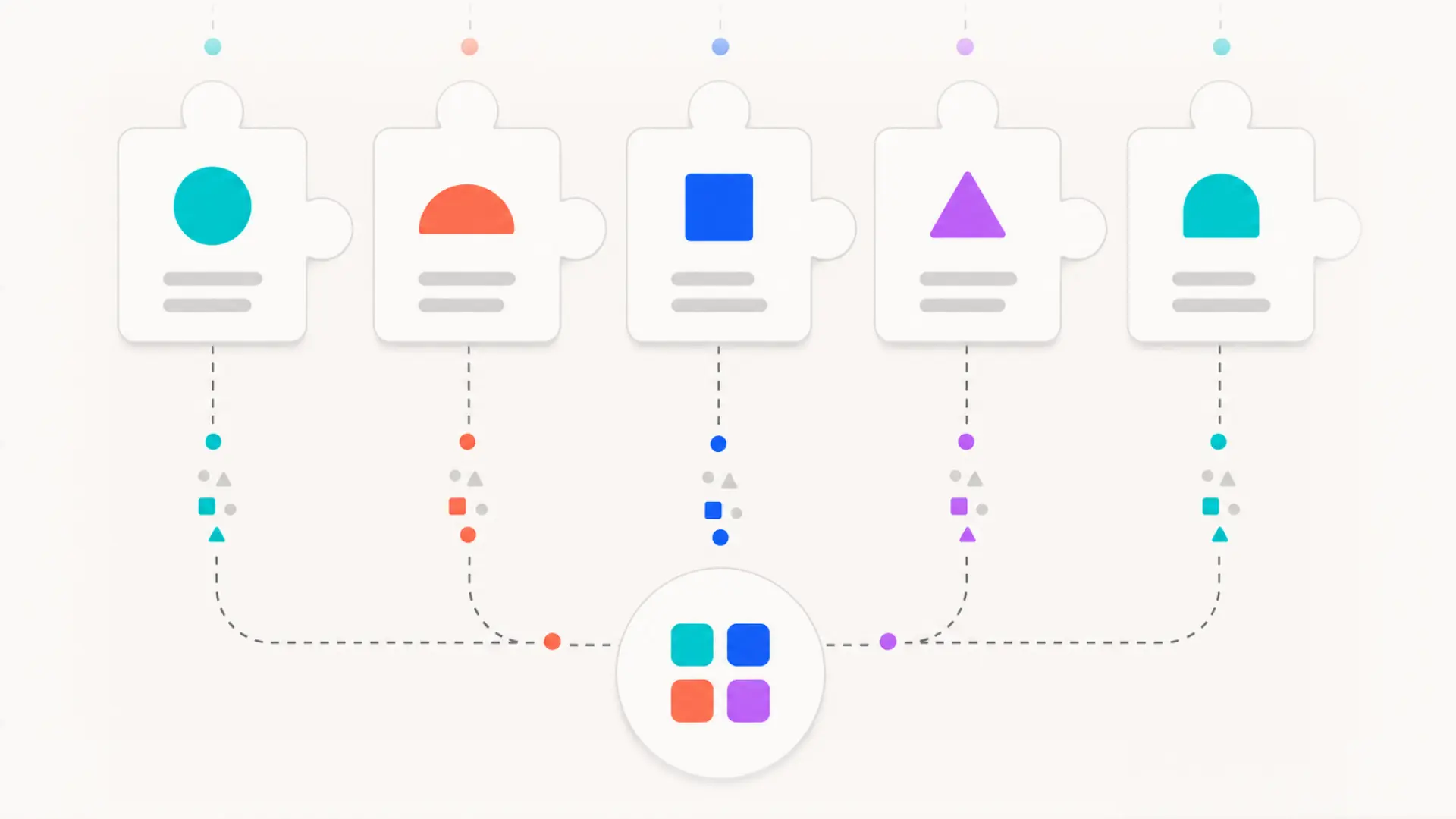
Federated API management separates two concerns that centralized and siloed models conflate: who governs and who operates.
Here's a quick comparison of how a federated approach is better than centralized and siloed models:
The federated API management architecture has two layers:
The control plane (centralized)
This is where governance lives. A federated control plane provides:
- Unified API discovery that automatically scans and catalogs APIs across all connected gateways
- Policy definition and enforcement (security standards, rate limits, authentication requirements) that propagate to every gateway
- Centralized observability with aggregated metrics, logs, and traces across the entire estate
- API catalog that serves as a single source of truth for every API, regardless of where it runs
The data plane (distributed)
Individual teams manage their own gateways (Kong, AWS API Gateway, Azure API Management, or any vendor) and deploy APIs in their preferred environment. The control plane never intercepts production traffic. It reads metadata, pushes policies, and aggregates telemetry asynchronously.
Some federated platforms use lightweight agents to connect to each gateway. Others use connector-based integrations. Either way, the principle is the same: governance doesn't sit in the data path, so it doesn't add latency.
This separation means an enterprise can enforce "all external APIs must use OAuth 2.0" once in the control plane, and that policy applies across Kong, AWS, Azure, and every other connected gateway, without any team changing their runtime.
How does APIwiz approach federated API management?
APIwiz is built around a federated API management platform model. Its control plane sits above gateways and service meshes, giving platform teams a single interface to discover, govern, secure, observe, and distribute APIs across the entire estate.
How each capability maps to federated governance:
- Design: Automated API linting enforces organizational style guides at design time, before code reaches production. Policies defined once in the control plane apply to every team's API specifications.
- Build: Federated gateway control extends governance across Kong, AWS API Gateway, Azure API Management, MuleSoft, and other vendors without requiring re-platforming. Teams keep their existing runtimes.
- Secure: Zero-touch API discovery scans across all connected gateways and environments to surface shadow and zombie APIs. Security pipelines enforce OWASP Top 10 controls uniformly across the estate.
- Observe: eBPF-powered observability supports end-to-end tracing at the kernel level with low performance overhead. The centralized dashboard aggregates telemetry from connected gateways.
- Distribute: A unified developer marketplace lets teams publish APIs to a shared portal with consistent documentation, tryout consoles, and usage-based monetization. API consumers find what they need in one place, regardless of which gateway hosts the API.
That full-lifecycle coverage matters because federation only works when governance spans more than runtime traffic. APIwiz connects design, build, security, observability, and distribution in one model, so platform teams are not left stitching separate tools together for governance, testing, security, and distribution.
What results do enterprises see with federated API management?
The proof is in the deployments.
Tonik Bank, a digital neobank in Southeast Asia, used APIwiz to build a scalable API foundation on Open Banking frameworks. By centralizing governance while maintaining the speed their engineering teams needed, Tonik achieved $1.5M in API-enabled revenue and $3.5M in OPEX savings, with a 68% increase in developer productivity.
Commercial Bank of Qatar (CBQ) manages 15+ domain teams through APIwiz's federated control plane. Each team operates independently within centralized governance guardrails, enabling the bank to modernize its API program without forcing a single gateway standard across every department.
These outcomes reflect the core promise of federation: teams move fast, governance stays strong, and the organization avoids the false choice between agility and control.
Do you need federated API management?
Federation isn't for every organization. A startup with a dozen APIs in one cloud region should use a simple centralized gateway. Federation makes sense when:
- You operate across multiple cloud providers or have hybrid on-premises/cloud infrastructure
- You've grown through acquisitions and inherited different API management vendors
- You have geographically distributed teams or users requiring regional deployments
- Regulatory requirements mandate data residency in specific locations
- Your organization has grown beyond the point where a single central API team can serve everyone efficiently
- You need to support multiple integration patterns (REST, GraphQL, gRPC, event streams) under unified governance
The key question: does the cost of managing multiple independent API ecosystems exceed the cost of a federated control plane? For enterprises with more than two gateways and compliance requirements, the answer is often yes.
If your organization runs multiple API gateways and needs unified governance without replacing existing infrastructure, book a demo with APIwiz to see how federated control works across your specific stack.
Key takeaways
Federated API management solves the governance gap that emerges when enterprises run multiple API gateways across teams, clouds, and regions. It provides centralized visibility and policy enforcement while preserving team autonomy over their own runtimes.
The architecture separates a control plane (governance, discovery, observability) from data planes (traffic routing, execution). This separation means governance doesn't add latency to production traffic or force teams onto a single vendor.
For organizations with multi-cloud environments, M&A-driven infrastructure diversity, or regional compliance requirements, federation is the operating model that turns API sprawl from a security liability into a managed estate. APIwiz delivers this as a full-lifecycle platform covering design through monetization.
FAQs about federated API management
What is the difference between federated API management and a multi-gateway setup?
A multi-gateway setup means you run more than one API gateway. Federated API management adds a centralized control plane that provides unified discovery, governance, and observability across all of them. Without federation, multiple gateways create silos; with it, they operate as a coordinated estate.
Can federated API management work with open-source gateways like Kong or Tyk?
Yes. Federated platforms like APIwiz connect to both commercial and open-source gateways through agents, connectors, or API integrations. The control plane reads metadata and pushes policies regardless of which gateway handles the actual traffic.
Does federated API management add latency to API calls?
No, when implemented correctly. The control plane operates out of the data path, collecting metadata and telemetry asynchronously without intercepting production traffic. Your existing gateways handle routing as they always have.
How does federation handle API security across different gateways?
The control plane defines security policies (OAuth requirements, rate limits, threat detection rules) and propagates them to all connected gateways. Each gateway enforces those policies locally. A standard defined once applies everywhere, regardless of vendor.
Is federated API management the same as GraphQL federation?
No, GraphQL federation stitches multiple schemas into a unified supergraph. API gateway federation connects multiple API gateways (REST, SOAP, gRPC, GraphQL, event-driven) under a single governance layer. They operate at different levels of the stack.
How long does it take to implement federated API management?
Initial federation of a single gateway can take days to weeks, depending on the platform and gateway complexity. Full enterprise federation across multiple gateways typically takes 2-3 months in phases. The biggest time investment is not technical, it is organizational alignment on governance standards.
Related reads
- API Management Goes Beyond the API Gateway
- How APIwiz Solves API Observability
- Hidden Cost of API Sprawl
- Why Your Organization Needs API Governance
- How Commercial Bank of Qatar Accelerates API-Driven Banking Modernization
- How to Improve API Adoption with a Platform-Based Approach
- How to Use API Lifecycle Management to Future-Proof Your Organization
- API Observability in the Age of AI
Effortless API Management at scale.
Support existing investments & retain context across runtimes.
.webp)
Effortless API Management at scale.
Support existing investments & retain context across runtimes.