

API Insights: Why Your Tools and Dashboards Are Lying About API Visibility

What are API insights?
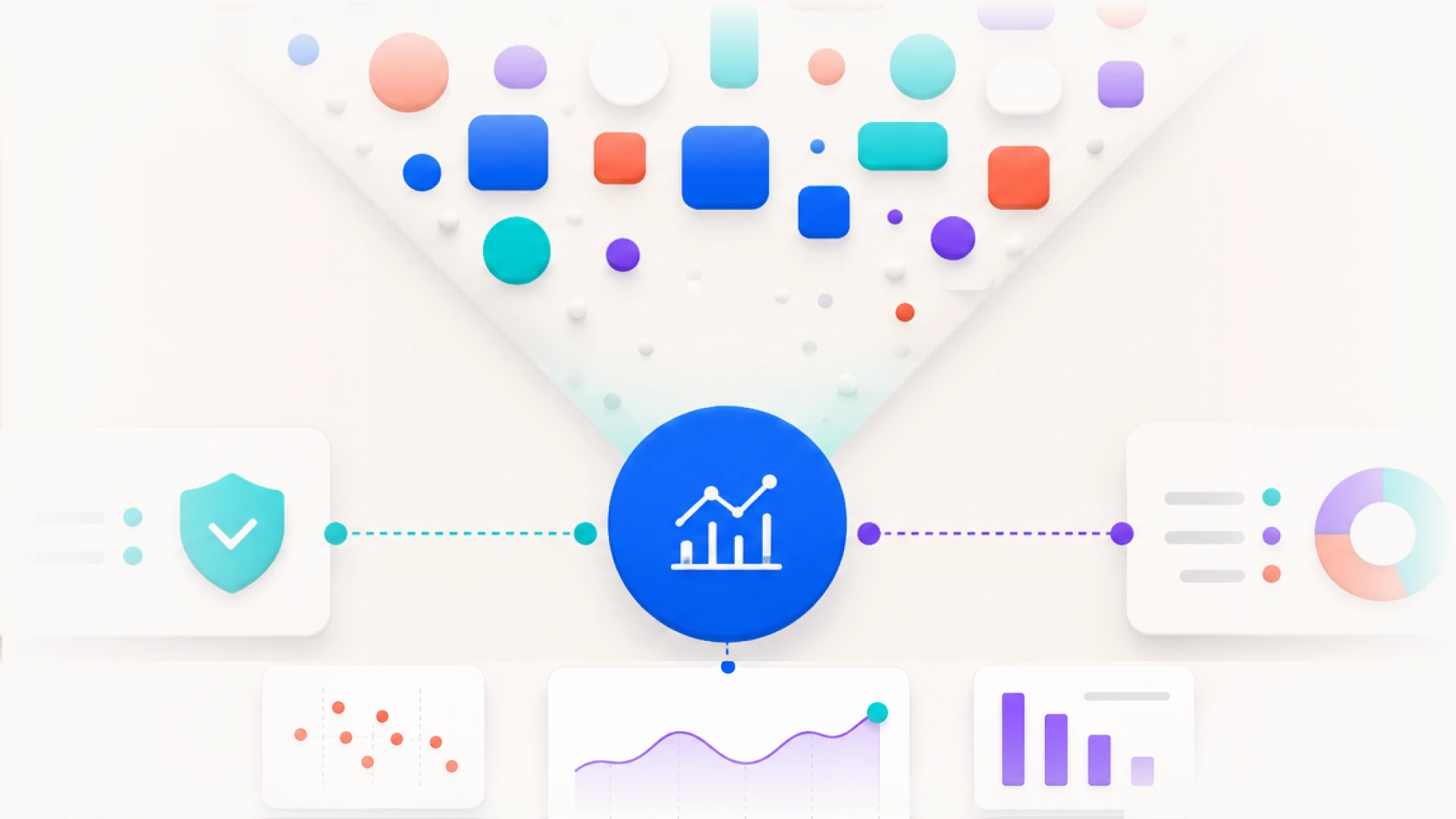
API insights are the unified intelligence layer that connects API inventory, performance, security, compliance, and business impact into a single operational view across an enterprise's entire API ecosystem.
Key aspects of API insights:
- Real-time API inventory and discovery across gateways and environments
- Performance, latency, and uptime monitoring correlated with business KPIs
- Security threat detection and compliance readiness tracking
- Consumer behavior analytics and adoption metrics
- Predictive anomaly detection and operational intelligence
Below, we explore why most enterprises think they have API visibility but don't, and what it takes to build an intelligence layer that actually answers the questions leadership asks.
Why do most enterprises lack real API visibility?
Most enterprises have hundreds or thousands of APIs running across multiple gateways, clouds, and teams. But having APIs and understanding them are entirely different things.
According to Invicti research, 78% of enterprise decision-makers admit they don't know how many APIs they have. The Salt Security Q1 2025 State of API Security report found that only 15% of organizations feel confident about the accuracy of their API inventories. The average enterprise manages 101 to 500 APIs, and API volumes grew 51-100% in the past year for 41% of organizations surveyed.
The visibility problem isn't about a lack of dashboards. Every gateway, every monitoring tool, every security platform generates its own metrics. The problem is that none of those dashboards talk to each other, and none of them answer the question leadership actually asks: which APIs drive business value, and which ones are liabilities?
When 99% of organizations report experiencing API security incidents in the past year, and 57% suffered API-related breaches in the past two years, per IBM's 2026 analysis. The gap between "we have monitoring" and "we have insight" is no longer academic. It becomes a board-level risk.
How does stakeholder misalignment worsen the visibility problem?
API visibility isn't just a technical gap. It's an organizational one. Different teams define "API insights" differently, and those definitions actively conflict.
- Engineering teams optimize for latency, uptime, and error rates
- Security teams need threat intelligence, anomaly detection, and compliance posture
- Product teams want adoption metrics, consumer growth, and usage trends
- Finance teams track API monetization, revenue attribution, and cost optimization
- Platform owners need centralized governance across distributed environments
Postman's 2025 State of the API report surveyed over 5,700 developers and found that 93% of API teams face collaboration challenges, including documentation gaps (55%), duplicate efforts (35%), and difficulty finding existing APIs (34%). Meanwhile, 65% of organizations now generate revenue from their APIs, which means API decisions have moved from engineering backlogs to P&L discussions.
When security sees a compliance risk, engineering sees a performance optimization, and product sees a feature request, and none of them share the same data, the organization makes slower, worse decisions.
Shadow APIs go undetected. Performance issues stay disconnected from business impact. Security anomalies lack the context that would make them actionable.
This leads to operational friction and a kind of strategic blindness.
Why do gateway dashboards and siloed tools fail at API intelligence?
Most organizations try to solve the API visibility problem by adding more dashboards:
- A gateway dashboard for traffic (Kong, AWS API Gateway, Apigee)
- An APM tool for latency (Datadog, New Relic, Dynatrace)
- A security platform for threats (Salt Security, Traceable)
- A separate analytics tool for business metrics (Moesif, custom BI dashboards)
This approach has a fundamental flaw: it measures parts, not the system.
Gateway dashboards only see traffic routed through them. The Salt Security H2 2025 report found that 80% of organizations lack continuous, real-time API monitoring. Their Q1 2025 data showed 58% of organizations monitor APIs less than daily. And 76% of CISOs still rely on legacy tools like WAFs and gateways for API security, according to Salt Security's 2025 CISO survey.
The real problem with siloed monitoring isn't that each tool does its job poorly. It's that no tool connects inventory to performance to security to business value. You can know your P95 latency is 200ms. You can see that you had 47 authentication failures last Tuesday.
But you cannot answer the question: which APIs are driving revenue? Which shadow APIs exist outside our governance? Which consumers depend on deprecated endpoints?
But, despite the challenges, the API observability and testing software market is projected to grow from $3.12 billion in 2025 to $6.32 billion by 2031. That growth reflects an overwhelming market demand. But spending more on fragmented tools does not produce unified insight. It produces more dashboards, more data, and more chaos.
Traditional monitoring measures systems. What enterprises need is a platform that measures API ecosystem health, governance, and business impact as one connected picture.
What does a unified API intelligence framework look like?
The shift from fragmented monitoring to unified API intelligence requires four layers working together, not four separate tools generating four separate reports.
Layer 1: Continuous discovery and inventory. You cannot govern what you cannot see. Automated API discovery across gateways, clouds, environments, and runtime systems builds a real-time inventory that includes shadow and zombie APIs. This inventory updates continuously, not quarterly.
The APIwiz Observe module handles this through eBPF-powered discovery that operates at the kernel level with near-zero performance overhead.
Layer 2: Operational and runtime visibility. Latency, throughput, uptime, error rates, traffic patterns. These are table stakes, but they need to connect to the inventory. When a performance anomaly surfaces, the platform should immediately show which consumers are affected, what business processes depend on that API, and whether the API is compliant.
Layer 3: Security, compliance, and consumer intelligence. Authentication failures, policy violations, IP reputation, domain usage patterns, sensitive data exposure. These signals need context from layers 1 and 2 to be actionable.
A security anomaly on an undocumented shadow API is a different kind of problem than one on a well-governed production endpoint. The APIwiz Secure module enforces OWASP Top 10 controls and continuously monitors compliance across the entire ecosystem.
Layer 4: Business intelligence and predictive analytics. API monetization metrics, consumer growth, revenue attribution, demand forecasting, and AI-driven anomaly detection. This is where API insights cross from becoming an output of operational tooling to strategic intelligence. When leadership asks "which APIs should we invest in, and which should we deprecate?", only this layer answers.
The federated control plane model matters here. Rather than forcing organizations to consolidate onto a single gateway, a platform such as APIwiz sits above existing infrastructure. It manages APIs across platforms such as Kong, AWS API Gateway, Azure API Management, and on-premises gateways from a single interface.
How does APIwiz approach API insights and analytics?
APIwiz provides a federated API intelligence platform that unifies discovery, monitoring, security, compliance, and business analytics across the entire API ecosystem, regardless of which gateways or clouds an organization runs.
Instead of adding another dashboard for every team, APIwiz brings the signals into one operating layer: what exists, who owns it, who consumes it, how it behaves, where risk is building, and which APIs matter to the business.
APIwiz offers the following capabilities for enterprises:
- See the full API estate. 360-degree API visibility connects inventories, gateways, environments, runtime traffic, domains, consumers, versions, and dependencies into a single operating view, making sprawl, ownership gaps, and duplicate services easier to spot.
- Map dependencies and change impact. Inventory and lineage views show service relationships, gateway mappings, version history, and downstream consumers, so teams can understand what might break before they change, retire, or expose an API.
- Measure health through consumer impact. Usage analytics, latency, throughput, uptime, error rates, response times, traffic trends, and top-consumer views show not only whether an API is degraded, but which teams, partners, applications, and customer journeys are affected.
- Turn security and governance signals into context. Security and threat analytics combine authentication failures, suspicious traffic, policy violations, IP and domain intelligence, sensitive data exposure, compliance posture, and audit-readiness indicators.
- Connect APIs to business outcomes. Business and revenue intelligence links API usage to monetization, customer engagement, partner growth, high-value consumers, and revenue impact, helping leaders decide which APIs to invest in.
- Act before issues become incidents. Alerts, automated recommendations, anomaly detection, demand forecasting, and optimization signals help teams plan capacity, mitigate risks, and prevent outages before consumers notice.
Enterprises running regulated, high-volume API programs have adopted this approach at scale.
Tonik, a digital neobank in Southeast Asia, used APIwiz to build a scalable API foundation for open banking and, in its first year, acquired 230,000 customers, achieved a $500 million valuation, generated $1.5 million in API-enabled revenue, and achieved $3.5 million in OPEX savings.
Commercial Bank of Qatar centralized API governance across 15+ domain teams, achieving unified visibility over their banking modernization program.
Talk to us to see how unified API intelligence works in practice.
What results do enterprises see with unified API intelligence?
Organizations that move from fragmented monitoring to unified API intelligence report measurable improvements across operational, security, and business dimensions.
Operational efficiency. Teams with centralized API inventory and runtime visibility detect incidents faster because they can immediately identify which consumers and business processes are affected. The correlation between performance data and business context eliminates the triage delay caused by cross-referencing multiple dashboards.
Security posture. Continuous discovery eliminates shadow and zombie API blind spots. When Salt Security reports that only 19% of organizations are "very confident" in the accuracy of their API inventory, the gap between known and unknown APIs represents the primary attack surface. Unified intelligence closes that gap by making discovery continuous rather than periodic.
Business value. When 65% of organizations generate revenue from APIs, per Postman's 2025 data, the ability to correlate API usage with revenue impact, consumer growth, and monetization metrics becomes a competitive differentiator. APIs that cannot be measured cannot be optimized.
Governance. Federated governance across distributed teams and gateways means policies are enforced consistently, compliance posture is visible in real time, and API sprawl is managed proactively rather than reactively.
The enterprises that treat API insights as a strategic capability, not just another monitoring tool, are the ones that turn their API programs from cost centers into growth engines.
Key takeaways
API insights are not about having more dashboards. They are about connecting inventory, performance, security, compliance, and business impact into a single operational intelligence layer.
Most enterprises have the data. What they lack is the framework to make it actionable.
The organizations that solve this problem gain faster incident response, tighter security posture, and the ability to make API investment decisions based on business outcomes, not operational guesswork.
Book a demo with APIwiz to see how unified API intelligence works across your existing infrastructure.
FAQs about API insights
What is the difference between API monitoring and API insights?
API monitoring tracks operational metrics like latency, uptime, and error rates for individual APIs. API insights connect those metrics to inventory, security posture, consumer behavior, and business impact across the entire ecosystem.
Monitoring tells you what happened. Insights tell you why it matters.
How do you discover shadow APIs in an enterprise environment?
Shadow API discovery requires continuous, automated scanning across gateways, clouds, CI/CD pipelines, and runtime environments. Static inventories and manual documentation are insufficient because APIs are created faster than they can be tracked. Runtime traffic analysis and eBPF-based discovery can identify undocumented endpoints without requiring changes to existing infrastructure.
What metrics should API insights track beyond performance?
Beyond latency, throughput, and error rates, API insights should also track consumer adoption patterns, revenue attribution, security threat indicators, compliance posture, API dependency relationships, and business KPIs such as monetization effectiveness and partner engagement.
Can API insights work across multiple API gateways?
Yes. It will work when a federated API intelligence platform, such as APIwiz, operates above individual gateways, consolidating data into a single, unified view. This is critical for enterprises running multiple gateways from different vendors because gateway-specific dashboards only show their own traffic and cannot provide ecosystem-level intelligence.
How does API intelligence support API monetization?
API intelligence connects usage data to revenue metrics, showing which APIs drive the most value, which consumers are most active, and where monetization opportunities exist. It also identifies underperforming APIs that may need to be deprecated or repriced, and tracks adoption trends that inform product strategy.
What role does AI play in API insights?
AI-driven API insights use machine learning for anomaly detection, predictive capacity planning, automated threat identification, and usage pattern analysis. Rather than replacing human judgment, AI surfaces the signals that matter most from the volume of telemetry data generated by modern API ecosystems.
Effortless API Management at scale.
Support existing investments & retain context across runtimes.
.webp)
Effortless API Management at scale.
Support existing investments & retain context across runtimes.